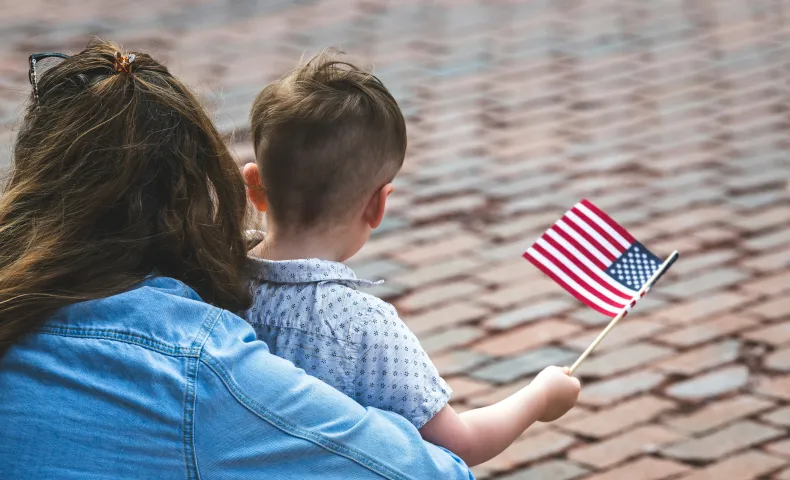
 Photo courtesy of John Sailer
What the Birthright Citizenship Decision Reveals About Philanthropy’s Path to Protect and Defend Democracy

This op-ed was first published by the Center for Effective Philanthropy on August 4, 2026. Authored by Aarti Kohli, Executive Director of Asian Law Caucus, and Elica Vafaie, Program Director for Immigrant Rights with the Evelyn and Walter Haas, Jr. Fund.
The Supreme Court’s recent Trump v. Barbara decision upholding birthright citizenship is bittersweet. On one hand, it reaffirms a core tenet of our Constitution and reflects our longstanding commitment to being a welcoming and inclusive nation. From Wong Kim Ark, the U.S.-born son of Chinese immigrants whose legal fight affirmed birthright citizenship in this country, to Folarin Balogun, who played for the U.S. in the World Cup, the citizen children of immigrant parents have contributed to our culture, our economy, and our communities for decades.
On the other hand, the Trump v. Barbara decision comes on the heels of three deeply troubling decisions: one allowing asylum seekers to be turned away at the border, a second decision giving the administration significant power to deny entry to green card holders, and a third permitting the revocation of Temporary Protected Status for thousands of Haitian and Syrian refugees. Together, these rulings are a stark reminder that our nation’s ideals, and our identity as a country that welcomes newcomers and protects those fleeing persecution and violence, are under profound threat.
As partners — one a leading civil rights organization and co-counsel on the birthright case, and one a long-time supporting funder — we believe the Trump v. Barbara win offers a roadmap for philanthropy to protect and advance democracy in our nation’s 250th anniversary year and beyond.
Among the top takeaways is that winning court cases is great — but it’s just as important to win the people. Only broad-based support for immigrants and democracy can deliver lasting protection against anti-immigrant politics and authoritarianism.
Winning Called for a Big Tent
The birthright citizenship win is the result of a wide-ranging campaign defending citizenship as a core pillar of U.S. democracy. The litigation before the Supreme Court, led by a legal team that included Asian Law Caucus and other national civil rights groups, was just the tip of the iceberg. A coalition of more than 200 national, regional, and local groups — including grassroots, faith, labor, academia, and more — pursued a variety of strategies that helped turn public opinion against the current administration’s efforts to undermine the Constitution.
The campaign employed traditional, digital, and ethnic media to advance a powerful narrative about how birthright citizenship benefits all of us, and how attacks on this core constitutional principle are part of a broader effort to narrow who belongs, who counts, and who gets to participate fully in American life. As part of this work, the coalition partners recruited and inspired “validators” from across the political spectrum — everyone from doctors and conservative legal scholars to grassroots leaders of color — to speak out for citizenship and the Constitution.
Business leaders went on the record talking about the potential workforce chaos that an adverse ruling would create; faith leaders spoke about the power of belonging and welcome; and Asian American voices lifted up the historic effects of birthright citizenship on their families and communities.
Building Broader Coalitions Across Issues
The birthright citizenship case demonstrated the importance of strategic efforts to build broader coalitions and a larger, more diverse tent of supporters for immigrant rights and democracy. It also demonstrated that public opinion can be on our side if we do this right. At last count, two thirds of Americans said they supported birthright citizenship. In the face of an authoritarian government committed to villainizing immigrants in its policies and social media streams, that’s a powerful base of support. Indeed, public opinion shows growing discomfort with this administration’s aggressive enforcement tactics. Majorities now oppose mass deportation and sanctuary city bans, and support for stepped-up Border Patrol hiring has dropped ten points in the past year alone.
In fact, it’s public pushback that has held the line on the administration’s most extreme anti-immigrant and anti-democratic policies — as evidenced by the protests and disgust that greeted the administration’s anti-immigrant clampdown on U.S. cities. And it’s been inspiring to see the organizing across the South these last two months after the Supreme Court gutted one of the monumental achievements of the civil rights era by making the Voting Rights Act’s historic protections for equal representation for Black and other voters of color null and void.
What the Next Wins Will Take
Of course, the bigger picture is still that this is an administration consistently undermining fundamental rights and opportunities. Unbridled immigration enforcement is creating a climate of fear in communities across the country, while there are simultaneous attacks on all Americans’ voting rights, on election administration, on peaceful protest, on diversity, and more.
In the face of this onslaught, we believe philanthropy can learn from the birthright citizenship win and ramp up support for the organizations and movements working together for a stronger, more inclusive democracy.
Groups like Asian Law Caucus and many others are flexing many of the same muscles that brought success in the birthright citizenship win, from broad-based coalition building to legal strategy, narrative, organizing, deep canvassing and more. But they need more support to scale and win their fights.
For funders concerned about the future of American democracy, this sets up some clear to-dos:
- Support frontline organizations engaged in this generational fight on both legal and organizing fronts;
- Provide the long-term, unrestricted funds they need; and
- Invest in the full range of interconnected strategies — coalition-building, litigation, narrative change, organizing, and more — that our win on birthright citizenship has shown can deliver results.
The birthright citizenship case is a big win, but this should have been 9-0. Instead, only five justices were willing to ground the ruling in the Constitution itself. A win this narrow on a question this settled is exactly why the next wins are going to require deeper, broader work and investment. Now is a time to strengthen the multiracial, cross-issue movements that are going to save our democracy and protect and defend the fundamental rights of all people.