How UC Berkeley Is Bringing Community Voices into Democracy Policy
 What happens when community leaders working on the front lines to tackle California’s toughest challenges join forces with students and faculty at one of the country’s leading public policy schools?
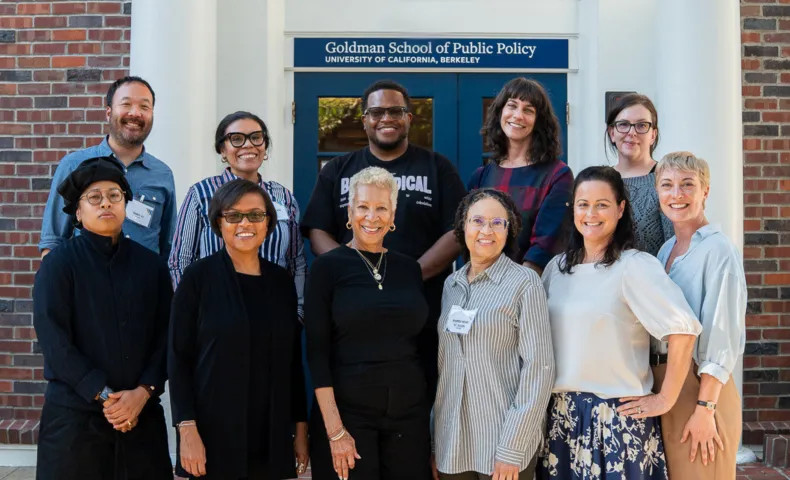
That question is at the heart of the Democracy Policy Fellowship, a program of the Center on Civility and Democratic Engagement at UC Berkeley’s Goldman School of Public Policy. Now in its second year, the fellowship enrolls eight community leaders from across California to work with faculty and graduate students to develop research and policy projects tailored to the needs of their organizations and communities.
The Evelyn and Walter Haas, Jr. Fund is a supporter of the fellowship, which is part of the Democracy Policy Initiative housed at the Goldman School of Public Policy. Current and past fellows include the leaders of Haas Jr. partner organizations like PICO California, Move the Valley, Free Press, and AAPIs for Civic Empowerment Education Fund (AAPI FORCE-EF). We recently spoke with Meredith Sadin, director of the Center on Civility and Democratic Engagement, about what the program is learning—and why she believes closer connections between universities and communities can strengthen both public policy and democracy.
Q: Why does this fellowship exist?
Meredith Sadin: Over close to two decades in academia, I’ve seen the distance that can exist between communities and the classroom. The fellowship is about closing that gap—putting practitioners and scholars in the same room to work on the same problems.
Q: How does the fellowship work?
MS: Fellows are community leaders who are nominated because they are working within organizations and communities as catalysts for change. At the center of the fellowship is a policy project tailored to each fellow’s organization and the community it serves. Fellows work with teams of Goldman graduate students and faculty advisors to translate their on-the-ground knowledge into research and policy ideas.
But the fellowship is about more than the project. Fellows participate in workshops and discussions, build research and data skills, connect with faculty and other practitioners, and can audit classes at UC Berkeley. It’s a two-way exchange.
Q: What did you learn from the first year?
MS: One of the biggest surprises was the amount of cross-pollination. We saw fellows make connections with faculty and students that turned into new projects. We saw fellows start collaborating with one another. What I hadn’t fully appreciated going in was that we weren’t just creating a fellowship—we were creating a peer community.
I was also excited to see how the fellowship gave people space to really think and dream. These are people who are deeply embedded in their organizations and often incredibly busy. Having a space away from the demands of their day-to-day work to connect, think, and learn from one another was really valuable. And now several members of the first cohort want to mentor our second-year fellows.
Another big lesson is how important dissemination is. Producing good research isn’t enough. We want it to reach policymakers, organizers, and community members who can actually use it. The goal is for this research to be as actionable as possible.
Q: What does that look like in practice?
MS: One great example is the work of first-year fellow Luz Gallegos of TODEC Legal Center. Luz partnered with seven Goldman graduate students to document the economic and human effects of federal immigration enforcement in California’s Inland Empire. Their research is creating a clear and solid basis for communications and policy advocacy on immigration issues in the Inland Empire and beyond. [see below for more] 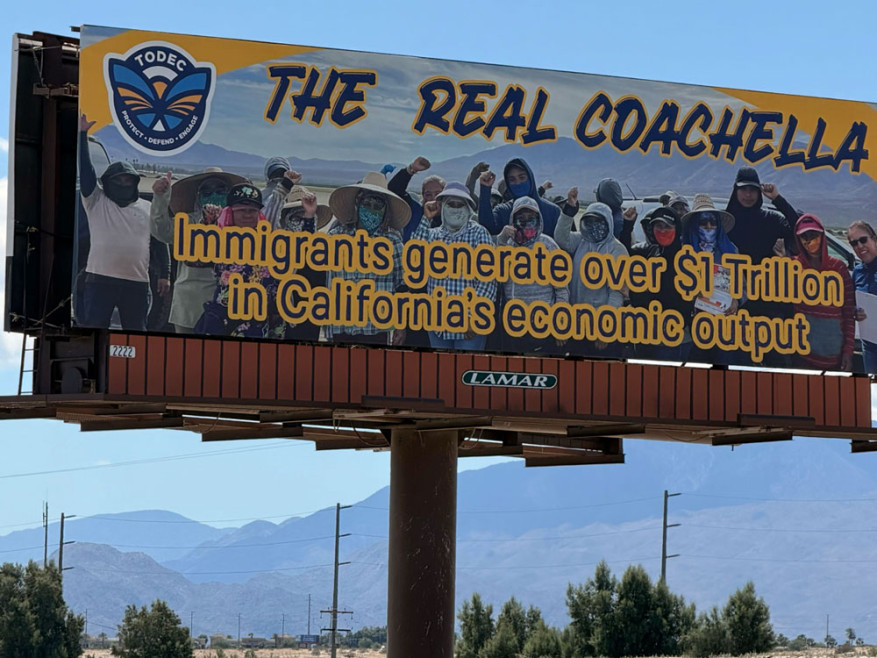
Q: Why does this kind of partnership matter right now?
MS: We’re living at a time when trust in institutions and organizations is extraordinarily low. There has also been distrust between community practitioners and academia—some of it for good reason. That gap needs to be repaired. We have so much to learn from one another.
What we saw in the first year of the fellowship is that collaboration can be a multiplier. It can produce policy research that is genuinely actionable and has public impact. And as we bring the first cohort together with the second, I’m excited to see that multiplier grow.
I hope the fellowship can serve as an example of what this type of partnership can do—not only for universities and community organizations, but for democracy itself.
Read about the 2026-27 Democracy Policy Fellows here.
FROM RESEARCH TO ACTION: DOCUMENTING THE IMPACT OF IMMIGRATION ENFORCEMENT
When 2025-26 Democracy Policy Fellow Luz Gallegos of TODEC Legal Center wanted to better document the effects of federal immigration enforcement on Inland Empire communities, the Democracy Policy Fellowship connected her with a team of seven Goldman School graduate students.
The students traveled to San Bernardino and Riverside in March 2026 to conduct interviews and focus groups. Their preliminary research documented wide-ranging effects: families avoiding stores, churches and parks; workers staying home; children missing school; and young people taking on additional work or family responsibilities.
The project paired the lived experience and trusted community relationships of TODEC with the research skills of Berkeley students.TODEC subsequently used data from the project on billboards across the Coachella Valley highlighting the positive contributions of immigrants in the region.
Now, TODEC and the Goldman School research team are working together to disseminate the research in ways that will inform statewide conversations on immigration issues and lift up the value of lived experience as a cornerstone for effective public policy.
Read more about the project here.