What happens when support works
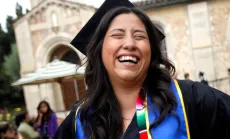
Meet Natalia
Evergreen Valley College | Santa Clara University
Natalia Medina transferred from Evergreen Valley College to Santa Clara University with determination, a willingness to advocate for herself, and exceptional support. But even with the guidance she needed to make informed choices, concerns about which credits would count shaped the universities she was willing to consider.
Transcript
What happens when students transfer from community college to a four-year college or university? What counts, what doesn’t, and what do they wish they’d known?
Through firsthand accounts, students share the decisions, setbacks, and support that shaped their experiences, revealing what’s at stake when credits do, and don’t, move with them.
Natalia didn’t navigate transfer alone. And that made all the difference.
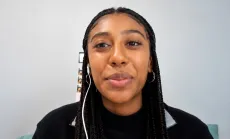
Natalia
My counselor was very upfront. Like, “Natalia, if you apply to these schools, you’re not going to get—a lot of your credits aren’t going to transfer.”
So I intentionally didn’t apply to the UCs because they wouldn’t take a lot of the credits, especially switching majors. He said, you can look here essentially in your Workday, and it’ll show you everything that transfers and doesn’t. I believe I got everything transferred. If not, it was like one or two classes, but they’re just elective credits. I really didn’t need them. And once I looked over it, I came to the conclusion that the credits that didn’t transfer were just elective credits that didn’t impact my major at the university or delay my timeline.
Obviously, all the courses at Evergreen are lower division, but when I was looking at my transfer credit, they counted it as an upper division course. But I think it was just like, they counted that as the equivalent that they have here, because it essentially includes the same content.
I had a good support network at Evergreen. Everyone who could possibly help me did.
But I had a really good support network at Evergreen. Everyone that could possibly help me at Evergreen. And my counselor—I got really close with her, and she helped me further those connections with people in the legal field.
But my dad, he’s very—I wouldn’t say hard on me, but he tells me what I need to do. He doesn’t know how to do it. But, you know, giving me the skills, like advocating for myself, you know, being strong when I’m talking to people or whatever the case is. So I think it’s more like the skills that he gave me, not necessarily like the knowledge that he has.
Initially, when you get accepted, you get your financial aid package, right? So you know what financial aid you’re going to have, what that’s looking like when you transfer in, and what you get to take that into consideration before you accept. I think for transfers specifically, they should see where their credits lie in terms of this is what’s usually accepted, this is what’s not for each specific major. I think that’d be really beneficial.
So I think just knowing and reassuring myself that I have done something to a similar extent, or have these experiences that can help me figure this out. I got myself this far, I can figure it out again, you know.
Students did the work. The right support makes the difference.