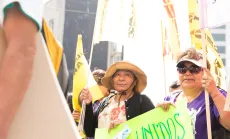
In Advancing Immigrant Rights, Local Coalitions Are Key
New video highlights the power of local action and collaboration in protecting — and furthering — California’s immigration policy gains.
https://player.vimeo.com/video/222430330
A new video from the California Immigrant Policy Center highlights the power of local and regional coalitions that are working to advance the cause of immigrant rights in California. At a time when fear is widespread in immigrant communities, the video is a reminder that California has made remarkable progress in advancing pro-immigrant policies. It features the perspectives of local activists and their partners (including Haas, Jr. Fund Vice President of Programs Cathy Cha) talking about the power of local action and collaboration in protecting California’s gains.
Report Highlights Crucial Role of Immigrants in the California Economy
The state’s 10 million immigrants produce one-third of California’s economic output but still face severe inequality.
California is home to 10 million immigrants, including nearly 3 million undocumented residents. At a time of uncertainty and fear for immigrant populations around the country, a new report from Haas, Jr. Fund grantee California Immigrant Policy Center (CIPC) shows the crucial role of these workers, parents, and children in the economic and civic life of the state.
Among the eye-opening data in the report is the finding that immigrants are more than one-third (35 percent) of the state’s civilian, non-institutional workforce, and they are responsible for nearly one-third (32 percent) of California’s economic output.
At $715 billion, the immigrant contribution to California’s GDP is more than the total revenue of Wal-Mart in 2016. Undocumented immigrants alone contribute about $181 billion to the California economy, more than the economic output of the entire state of Oklahoma.
Despite these contributions, immigrant communities in California face a growing crisis of severe economic inequality. The CIPC report shows how economic hardship is a common challenge for both immigrant and U.S.-born workers in the state. It also includes short case studies of immigrant neighborhoods where residents are grappling with challenges such as gentrification and displacement.
Despite immigration setback, California keeps moving forward
The U.S. Supreme Court blocks the Obama administration’s plan to extend deportation relief to more immigrants beyond those covered by the Deferred Action for Childhood Arrivals (DACA) program. Despite the defeat, California continues to offer a model for pro-immigrant reforms.
A piece by NCRP's Dan Petegorsky reflects on lessons learned in the California Civic Participation Funder's latest report, Bolder Together 2
One of the more persistent dilemmas facing funders and nonprofits is how to achieve the right balance between funding intended to achieve specific objectives and funding to build, sustain and grow organizations. The California Civic Participation Funders collaborative (CCPF) has found that balance.
Mission-driven organizations are built for a purpose, and attract both people and money devoted to specific objectives aligned with that purpose. High profile campaigns can attract more people and resources, but they can also drain a group’s resources, leaving it poorly positioned to launch future campaigns. That’s why over and above strong campaigns, dynamic nonprofits also pay close attention to recruiting and training new staff and leaders; continually assessing their ever-changing economic, social and political environment; learning how to use new technologies, etc.
CCPF’s recent report, Bolder Together 2: Building Grassroots Movement for Change, describes how this collaborative funding initiative arrived at its both/and approach. It’s especially timely as we enter the final stages of the 2016 presidential election, where so much focus is on near-term outcomes—outcomes that are vital, and that can be pursued in ways that help to achieve longer-term goals as well.
As the report explains, “Civic participation funders often focus exclusively on supporting the day-to-day work of organizing, voter mobilization and outreach—and sometimes only in the months and weeks leading up to the election. Predictably, the focus is on supporting organizations to get results, and the sooner the better. CCPF, however, evolved in its approach and now supports core civic participation activities while also investing to strengthen the capacity of leaders, organizations and movements to do this work over the long haul.”
Dr. Hahrie Han, who has studied how organizations successfully develop activists and leaders over time, recommends a similar approach in a recent paper presented to the Ford Foundation. She calls it the Profits+Assets framework: figuring out “how to fight for immediate wins (profits) in a way that simultaneously builds longer-term capacity (assets).”
That longer-term capacity is vital for preserving the wins that campaigns achieve. As Han explains, organizations need the capacity to mobilize their constituencies not on a one-off basis, but consistently—to “develop what scholars call a ‘recurrent reputation’ for consistently being able to move a constituency.” This reputation earns them the political capital they need not only to win the changes they seek through their campaigns, but to defend and preserve those changes in the face of inevitable backlash.
“So often,” Han notes, “success is measured in transactional terms that focus only on whether voters turn out, candidates win, or policies pass. Long-term success depends not only on if those outcomes are achieved, but how those outcomes are achieved. Are votes gained, elections won, and policies passed in ways that build the strategic capacity of organizational leaders, that strengthen the relationship between the organization and its constituency, and that translate those relationships into elite lobbying power?”
The director of an organization in a perennial electoral swing state, and whose funding often resembles more a contract than a grant, recently described to me how the intense pressure to meet targets during a scaled-up campaign was overwhelming for the organization: it left burned out staff and leaders, and badly frayed relationships that took years to mend. What’s more, if local groups are perceived to be disproportionately tied to externally driven agendas, this can undermine rather than bolster local support: they risk being perceived simply as contractors—especially in states where people are inherently suspicious of outsiders.
By contrast, a CCPF grantee spoke of the synergy between funders and nonprofits that has developed through a highly collaborative, both/and approach: The unique partnership with CCPF has enabled the grantee organization both to set higher campaign targets and to build the organization so it can achieve those targets in ways that build and strengthen rather than deplete organizational assets.
As Connie Galambos Malloy of the James Irvine Foundation, one of the CCPF collaborative’s members, explains: “We have made organizational development and leadership development important priorities … We are supporting groups to integrate civic engagement into their entire organization and build their leadership and organizational strengths in ways that contribute directly to better outcomes in organizing and electoral and advocacy work.”
Here are some of CCPF’s key lessons learned:
Encourage Collaboration over Competition. Funder practices too often force groups to compete for scarce dollars. CCPF has settled on a different approach—facilitating and incentivizing collaboration—that is delivering promising results.
Cover More Bases to Get to Scale. Instead of identifying one or two groups to lead local efforts, CCPF supports individual organizations to do their work more effectively while creating the table where they can collaborate, coordinate and “cut turf.”
Let Local Groups Lead with Their Issues, Not Yours. CCPF has found success in allowing priorities and strategies to emerge from local groups, with funders at the table to co- design solutions.
Invest in Long-Term Movement Leadership. Over time, CCPF has made an increased commitment to supporting local groups to strengthen their capacity to lead in a movement context—and it has paid off in stronger collaboratives and real wins.
Dan Petegorsky is senior fellow at the National Committee for Responsive Philanthropy (NCRP).
The U.S. Supreme Court on Thursday turned down an opportunity to bring more compassion and common sense to U.S. immigration policy. This is a serious mistake that will perpetuate the pain of exclusion for many people who are deeply rooted in our communities.
From the time the Obama administration first announced it would provide deportation relief through “deferred action,” a strong consensus emerged from top legal experts that the White House was standing on firm constitutional ground. What’s more, the refusal of Congress to take any action on this issue made this relief, while partial, an absolutely essential step.
Fortunately, California offers a model for thoughtful action on immigration in the absence of leadership in Washington. In the past several years, California policymakers have enacted a variety of laws to expand immigrant rights.
California’s pro-immigrant policies include a law providing driver’s licenses for undocumented immigrants. California is also the first state to allow low-income undocumented children to be eligible for free or low-cost health insurance under the state’s Medi-Cal program. Now, the state is charging ahead with efforts to heal the unjust exclusion of undocumented adults from health care.
And last but not least, California is poised to invest $30 million in state funds to help Californians gain citizenship and take advantage of the Deferred Action for Childhood Arrivals (DACA) program, which provides many undocumented young people with work permits and temporary relief from deportation.
While Thursday’s decision on expanded administrative relief is a temporary setback, we encourage immigrants to become citizens and vote and access all available protections, including DACA.
It’s time once and for all to recognize that everyone will benefit when all community members can finally live their lives in the open, with dignity and the ability to contribute without fear to their communities and our local economies.
Thursday’s news is sure to spark further efforts in California to help the rest of the nation see that immigrants are an asset for our communities and our economy. We and our pro-immigrant partners will focus on increasing citizenship, making sure young people in our state continue to apply for the DACA program, and upholding the human rights of all immigrants who call the Golden State their home.
But the fact remains that there are 11 million people living without legal status in communities across the country. This number includes 2 million people in our state, with eight in 10 undocumented California residents having lived in the United States for five years or longer. Whether we know about their immigration status or not, immigrants are a critical part of the fabric of local communities throughout California.
It’s time once and for all to recognize that everyone will benefit when all community members can finally live their lives in the open, with dignity and the ability to contribute without fear to their communities and our local economies. We also need to recognize that progress is essential for immigrants who are too often overlooked, including members of black, Asian, LGBT, Middle Eastern and Muslim communities, those who may have had contact with law enforcement, and those who have recently arrived fleeing violence.
Even as the immigrant rights movement explores legal options in response to the Supreme Court’s 4-4 tie, we need to keep working for inclusive and transformative immigration reform in Washington. Our nation’s leaders need to understand that the threat of deportation that hangs over so many communities is a problem we cannot afford to ignore.
Let’s come together in California to show what happens when we build communities and an economy where everyone can contribute. And let’s keep the pressure on Washington for real, long-term, commonsense solutions to fix our nation’s unjust immigration system.
Cathy Cha is the program director for Immigrant Rights and Integration at the Evelyn and Walter Haas, Jr. Fund. Cynthia Buiza is Executive Director of the California Immigrant Policy Center.
Building strength on the field as well as in the classroom
The Fund makes a $15 million challenge grant to help construct UC Berkeley’s Student Athlete High Performance Center, a state-of-the art facility that houses both sports training equipment and academic resources for student athletes.
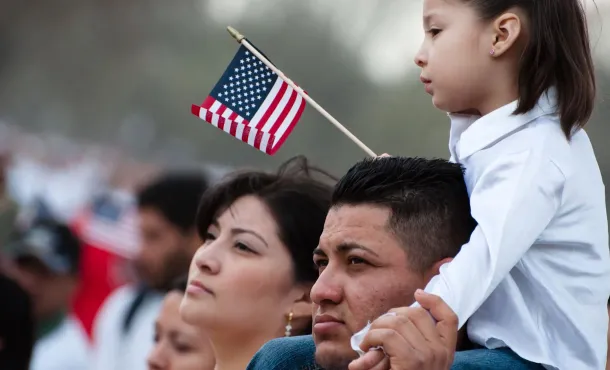




 Photo by Derek Giovanni



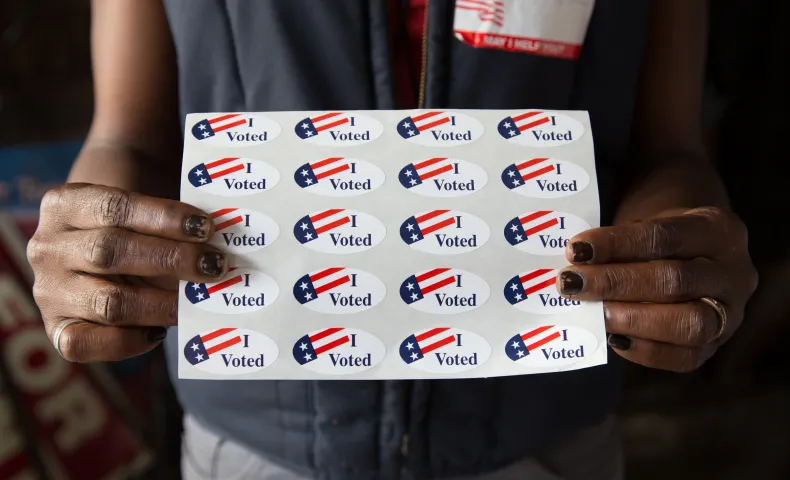 Photo by Sabrina Wong

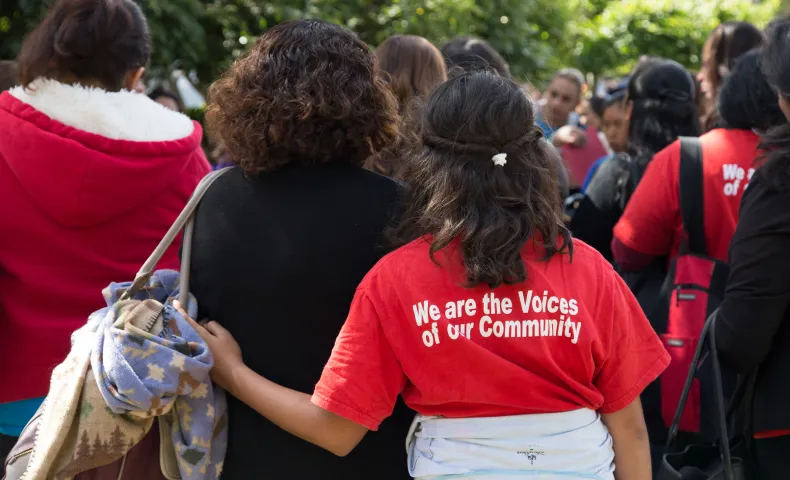 Photo by Sabrina Wong